
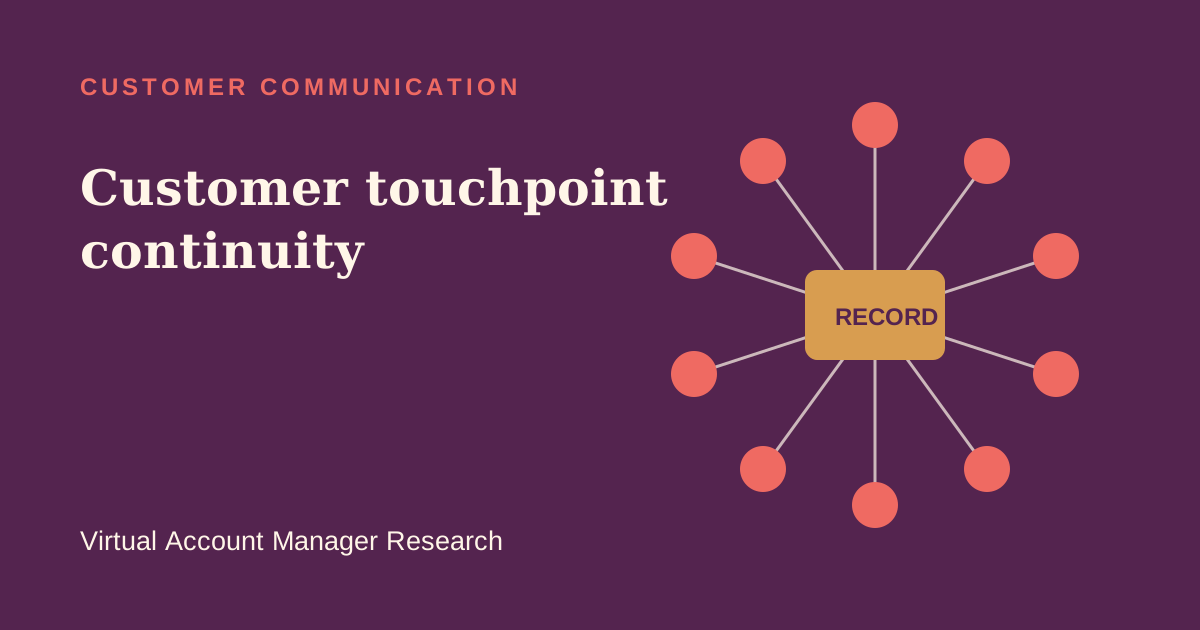
What operating controls help an account team preserve context when buyers use many interaction channels?
MethodWe reviewed McKinsey's 2024 B2B Pulse finding that buyers use an average of ten interaction channels. We used the average as a signal of coordination complexity, not as a target or a causal claim.
Key findings
- McKinsey reports that B2B buyers use an average of ten interaction channels during the buying journey.
- More channels create more places for requests, decisions, and commitments to lose context.
- A shared continuity record should capture ownership, source, decision state, next action, and closure evidence.
The number is a signal, not a target
Ten channels is an average across respondents, not a recommendation for every account. The useful lesson is that important context may arrive through meetings, email, portals, chat, phone, self-service tools, and other approved routes.
A team should offer a manageable channel set and design handoffs between them. Adding channels without ownership or records can increase customer effort.
Build the minimum continuity record
For each consequential request, record a stable identifier, account, stakeholder, source channel, received time, requested outcome, owner, decision state, due date, next action, and closure evidence. Preserve the original wording when meaning or commitment matters.
Keep restricted information in its approved system and reference it safely. A copied summary must not become a new source of truth merely because it is easier to find.
Watch three common failure points
First, channel switching can strip away the original purpose. Second, a handoff can create two apparent owners or none. Third, a status copied between systems can become stale while still looking current.
Define which system governs each field and how conflicts are handled. Unknown and disputed states should remain visible until an authorized source resolves them.
Run a weekly continuity review
Review aging requests, items without owners, channel changes, inaccessible evidence, and commitments approaching due dates. Sample both ordinary and exceptional records, then trace each from intake to closure.
The goal is not to force all communication into one channel. It is to make the accountable owner, evidence, and next action visible across the channels customers actually use.
Method and limitations
This brief applies an aggregated survey finding to workflow design. McKinsey's result does not prove that any specific channel set improves retention, satisfaction, or revenue. Virtual Account Manager did not conduct the survey.